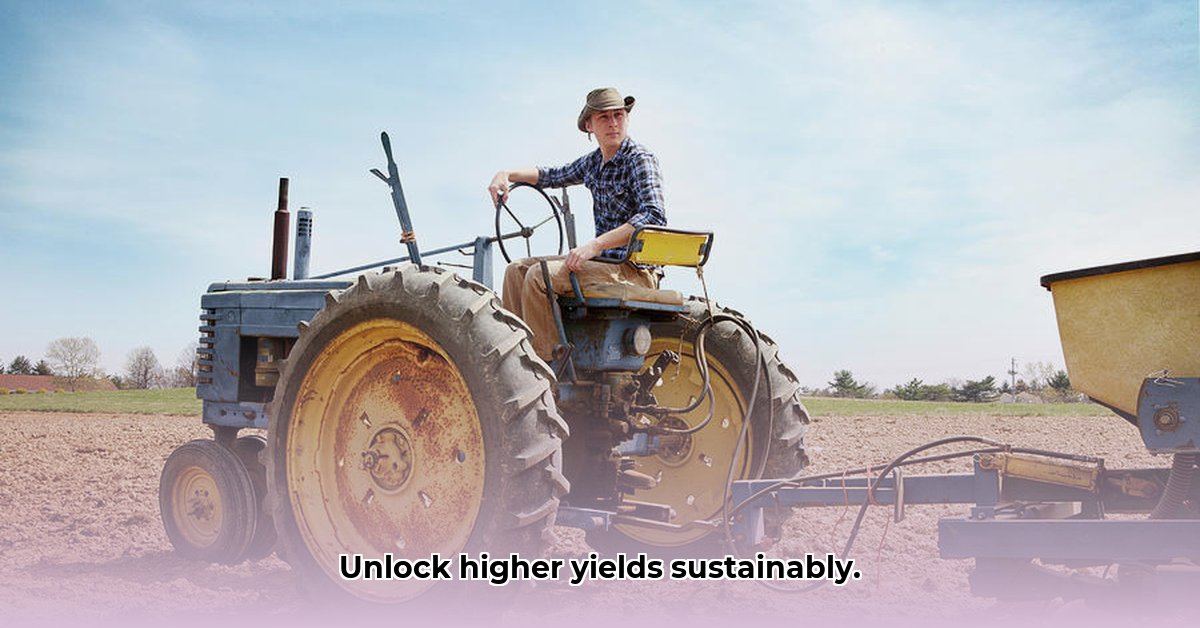
The image of a farmer on a tractor is evolving. It's no longer simply a symbol of tradition; it represents the forefront of modern agriculture, integrating technology and sustainable methods to increase food production while safeguarding our planet. This article explores this transformation and provides a practical roadmap for sustainable success. For smaller farms, consider tractor attachments to boost efficiency.
Precision Agriculture: Farming Smarter, Not Harder
Imagine a tractor guided by GPS, precisely planting seeds, applying fertilizer, and watering—a personalized care plan for each plant. This is precision agriculture, maximizing yield while minimizing waste. Soil sensors provide real-time data, allowing farmers to make informed adjustments via the tractor. This targeted approach conserves resources, reduces environmental impact, and cuts costs. Studies indicate cost savings ranging from 10% to 30%, depending on the technology and crop; however, the initial investment can be substantial, particularly for smaller farms. This highlights a critical challenge demanding innovative solutions. Isn't optimizing resource use a key to both environmental stewardship and farm profitability?
Regenerative Farming: Working With Nature
Beyond advanced technology, regenerative farming is gaining traction. This approach views the land as a living ecosystem, prioritizing soil health. Techniques like no-till farming—leaving the soil undisturbed—improve soil structure and water retention. Cover cropping—planting specific plants to enhance fertility and prevent erosion—further contributes to carbon sequestration and biodiversity. While the long-term benefits of improved soil health and increased yields are evident, accurately quantifying short-term gains remains a challenge. Scientists are continuously refining measurement methods for factors like carbon sequestration, acknowledging the variability based on specific techniques.
The Ups and Downs: Challenges in Sustainable Farming
The transition to sustainable farming isn't without hurdles. High initial investment costs for precision agriculture technology pose a significant barrier, particularly for smaller operations. Data security is another critical concern—farmers are collecting vast amounts of data, demanding robust protection. These challenges need creative and collaborative solutions. How can we make the transition to sustainable agriculture more accessible and affordable for all farmers?
A Roadmap to Sustainable Success
Bridging the gap between ambition and reality requires collaboration among farmers, businesses, governments, and financial institutions. Here's a multi-faceted approach:
For Farmers:
- Explore: Investigate precision agriculture options starting with small-scale trials, such as GPS-guided planting, to assess the benefits.
- Adapt: Gradually integrate regenerative practices, observing results and adapting strategies. Incremental change can yield significant long-term effects.
- Learn: Stay current with technology and farming techniques through workshops, conferences, and online courses.
- Collaborate: Share experiences, best practices, and support through networking with other farmers.
For Agribusiness:
- Develop: Create cost-effective and accessible precision farming tools designed with the needs of small farms in mind.
- Invest: Fund research into sustainable crop varieties and farming methods that can adapt to climate change.
- Partner: Collaborate with farmers to understand their needs and offer tailored technological solutions.
For Governments:
- Incentivize: Provide financial support and incentives to farmers adopting sustainable practices.
- Educate: Invest in comprehensive training programs and extension services.
- Regulate: Establish policies and regulations to protect farmers' data and promote sustainable agriculture.
For Financial Institutions:
- Invest: Develop financial products, such as grants and low-interest loans, to support sustainable agriculture initiatives.
- Support: Actively assist farmers transitioning to sustainable practices by offering financial aid.
Comparing Farming Methods: A Quick Look
| Feature | Conventional Farming | Precision Agriculture | Regenerative Agriculture |
|---|---|---|---|
| Resource Use | High | Optimized | Optimized |
| Environmental Impact | High | Lower | Significantly Lower |
| Initial Cost | Low | High | Moderate |
| Long-Term Cost | Potentially High | Potentially Lower | Potentially Lower |
| Yield Potential | Moderate | High | High (long-term) |
The farmer on the tractor isn't merely operating machinery; they are shaping the future of food production. By combining technology with sustainable practices, we can create a productive and environmentally responsible food system for generations to come. Continued research and development hold the promise of even greater advancements.
Calculating ROI for Precision Agriculture Investments in Small Farms
Farming is a business, demanding smart investments. Determining the return on investment (ROI) for precision agriculture requires a multifaceted approach, accounting for short-term and long-term financial implications, including sustainability benefits. How can farmers effectively weigh the initial costs of precision agriculture against potential long-term gains?
Step-by-Step ROI Calculation
Here's a practical approach:
- Investment Costs: List all upfront and ongoing costs (equipment, installation, software, training, maintenance).
- Increased Revenue: Project yield increases and income gains due to reduced waste, improved quality, and efficiency.
- Cost Savings: Quantify savings from reduced fertilizer, water, or pesticide use.
- Net Income: Subtract total costs from projected increased revenue plus savings.
- ROI: Divide net income by the initial investment cost; multiply by 100 for percentage.
- Long-Term Perspective: Consider equipment lifespan and long-term impact on soil health and cost savings.
The Sustainability Advantage
Sustainable practices often yield environmental and economic advantages. Reduced pesticide use minimizes costs and safeguards beneficial insects. Improved soil health translates to higher yields and reduced fertilizer needs.
Risk Assessment: Managing Uncertainties
Farming involves inherent risks. A risk assessment matrix can help:
| Technology/Investment | Probability of Success | Impact of Failure | Mitigation Strategies |
|---|---|---|---|
| Precision Seeding | High | Low | Regular maintenance, proper calibration |
| Drone Technology | Medium | Medium | Redundancy with ground-based systems |
| Soil Sensors | High | Low | Redundant sensors, regular calibration |
By identifying and mitigating potential problems, farmers can make informed decisions.
Key Takeaways:
- Precision agriculture ROI requires a holistic approach considering short-term and long-term impacts.
- Account for all costs and potential risks.
- Sustainability significantly influences long-term ROI.
- Regularly review and adapt investment strategies based on performance and market conditions.